Speakers

General Session
Federal energy development now operates within an era of a high-velocity political pendulum, marked by rapid changes in congressional majorities and transitions between presidential administrations with fundamentally different energy policy objectives. Over the past 15 years, the federal energy legal framework has been shaped less by stable policy consensus and more by frequent swings in political control—both in Congress and within the Executive Branch. Continued changes in majority parties in Congress, razor-thin margins in the Senate and House of Representatives, and transitions between presidential administrations with fundamentally different energy priorities have produced a regulatory environment characterized by volatility, uncertainty, and persistent litigation risk.
Recent federal energy policy over the past four years reflects a recurring pendulum effect: ambitious legislative proposals, partial statutory compromise, aggressive executive implementation, and eventual judicial intervention. These fast-changing variables create regulatory uncertainty, which creates business uncertainty in terms of budgeting, planning, and deploying capital, particularly for projects involving federal permits or having some other significant federal nexus. Operators, investors, and their counsel must assume that regulatory regimes may be short-lived, legally contested, and subject to reversal within a single election cycle.
Key Takeaways
1. Regulatory reversal and policy swings should be the baseline assumption when formulating risk management and permitting strategies for energy projects.
2. Proactive legal advocacy is required at every stage of the administrative process.
3. In Legislative and Executive Branch advocacy, provide solutions with a roadmap, not a maze.
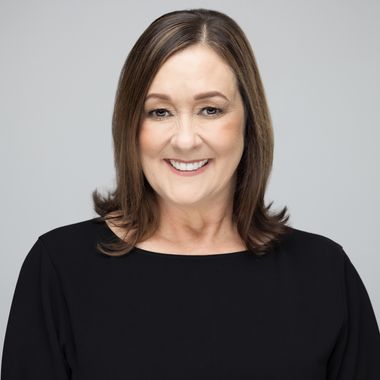
Melissa Simpson advocates for permitting certainty on behalf of Western Energy Alliance. She has an extensive career in natural resources, conservation, and energy policy that spans across private-sector, government, and non-governmental organizations.
Prior to joining the Alliance, she was the director of global government affairs at Sempra, heavily focused on liquified natural gas (LNG) exports and emissions verification and reporting. Before her time at Sempra, she served as deputy assistant secretary for the Bureau of Energy Resources at the Department of State in the first Trump Administration, leading efforts on cross-border permitting for hydrocarbons. During the George W. Bush Administration, she served as deputy under secretary of Natural Resources and Environment at the U.S. Department of Agriculture where she supervised energy and wildlife policy directives and regulations for the U.S. Forest Service. She also served as counselor to the assistant secretary for Land and Minerals Management at the Department of the Interior, where she developed strategies to expedite oil and natural gas permitting on public lands through collaboration with multiple-use conservation groups.
Between her years of service in government, Melissa was the director of government affairs and science-based conservation at Safari Club International and a consultant for independent oil and natural gas companies.
She is a native Coloradan, holding a JD from Creighton University School of Law and a BS in political science from Colorado State University.