Leading From the Center of the Storm
by/ BLAINE GAMBLE, CPL
2025-26 AAPL Treasurer and Founder and President of Equitas Energy Partners LLC
In the world of energy development and land use, whether you’re compiling a runsheet to drill a horizontal well, acquiring minerals, securing waivers for a utility‑scale solar project, obtaining right‑of‑way for a water transfer line or consulting for a new data center, there is one group of professionals working quietly behind the scenes to make it all happen. They’re the first in, sometimes the last out and often the only people facing the on‑the‑ground challenges that can make or break a project. They’re your field landmen. And it might be time to ask yourself … when’s the last time you thanked one?
CENTER OF THE STORM
Most people in the energy and infrastructure sectors understand the intensity that comes with major projects — which mean major capital — but perhaps few truly appreciate the pressure placed squarely on a field landman’s shoulders. When drilling schedules are tight, when acquisitions hinge on a 30‑day due diligence period, when “no” isn’t an option for that temporary frac‑line agreement or that prize bull gets hit by a water hauler, it’s usually the field landman who stands between progress and costly delay. They’re expected to navigate everything from courthouse chaos to landowner conflict without letting the pressure derail the timeline. Whether the pressure comes from a drilling rig burning $40,000 a day, a buyer who needs accurate mineral title for an eight‑figure acquisition or a client waiting on the green light for massive capital investment, field landmen absorb a lot of that stress so their clients can keep moving forward. In one day, a field landman might serve as translator, mediator, fact‑checker, historian, negotiator, messenger and problem-solver. They stand quietly at the center of the storm, handling the details that few others ever see.
THE DAY BEFORE YESTERDAY
Let’s be honest, deadlines in this industry are rarely gentle suggestions. They’re usually urgent, often unreasonable and sometimes bordering on impossible. Yet somehow, the expectation is always that the field landman will “figure it out.” If the land department is told, “We need this due diligence completed by Monday at 8 a.m.,” you can bet there is a field landman somewhere about to put life on hold to make that happen. They squeeze in courthouse visits. Track down heirship leads. Sort through dusty deed books. Work evenings and weekends. And then … they deliver. The deadlines might be unrealistic, but their professionalism isn’t. Their ability to perform under pressure ensures projects stay on schedule, protects clients from risk and prevents costly operational delays.
PERSONAL SACRIFICE NO ONE SEES
Field landmen sometimes live on the road and spend countless nights in less-than-stellar hotels or motels. Field landmen clock in from a pickup truck, an airport terminal, courthouse steps or a ranch road with zero cell service. They travel long distances to meet with landowners who prefer a handshake over an email. They spend hours in courthouses where documents are handwritten, scattered or stored in basements. They adapt to towns with limited lodging, limited dining and even more limited Wi‑Fi. It’s easy to forget that behind every release to build, every signed lease, every easement secured and every landowner relationship maintained is a field landman who sacrificed time with their family to make it happen. Their commitment doesn’t show up on a balance sheet, but without it, the numbers on that sheet wouldn’t exist.
EVER‑CHANGING LAWS AND REGULATIONS
Field landmen are also expected to stay ahead of a constantly shifting legal and regulatory landscape, often across multiple states. Laws, reporting requirements, environmental rules and policies change regularly, making it a full-time job to stay informed. On top of that, continuing education isn’t optional — it’s essential. Seminars, certifications and professional development all take time and money. Many field landmen work as independent contractors. Those training days come directly out of their own pocket, both the course fees and the lost billable time. They invest in themselves because their clients rely on their expertise.
INVISIBLE WORK THAT MAKES EVERYTHING POSSIBLE
Every producing well, thousand‑acre mineral deal, solar or wind project, surface‑use agreement and AI data center site that moves from concept to construction has one thing in common: None of it happens without landwork, and field landmen are involved at nearly every step. They quietly manage risk behind the scenes, preventing lawsuits, regulatory violations, operational hangups and multimillion‑dollar mistakes. Their impact is enormous, but because it happens out of sight, it’s often overlooked.
A SMALL GESTURE THAT GOES A LONG WAY
If you’re an operator, solar developer, mineral buyer or a land service company, take a moment to think about the field landmen supporting your work: the pressure they carry, deadlines they meet, miles they drive, nights away from home, tough conversations they navigate with patience and professionalism, conflicts they defuse and problems they solve before anyone else even knows they exist. Think about how many times they’ve met a project timeline, prevented litigation or secured the critical rights needed for their clients to move forward.
And then ask yourself: Have we thanked our field landmen lately?
If not, now’s a good time. The projects that power our states, fuel our economy, enable new technology and shape the future of energy all start with landwork and rely on the field landmen who make it possible. Every day. Everywhere. Unnoticed, but essential.
A simple “thank you” might just be the easiest thing you do today.
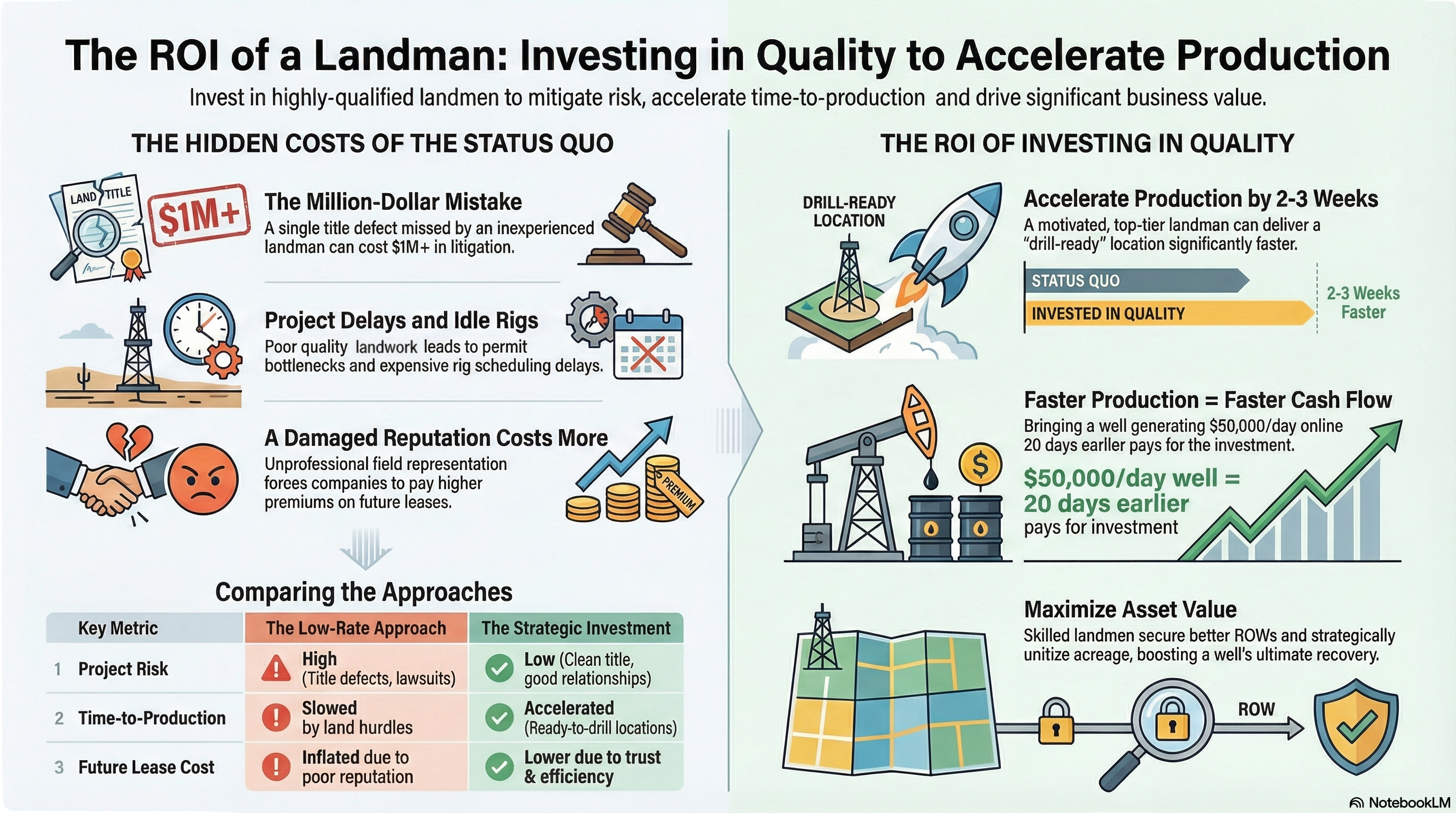
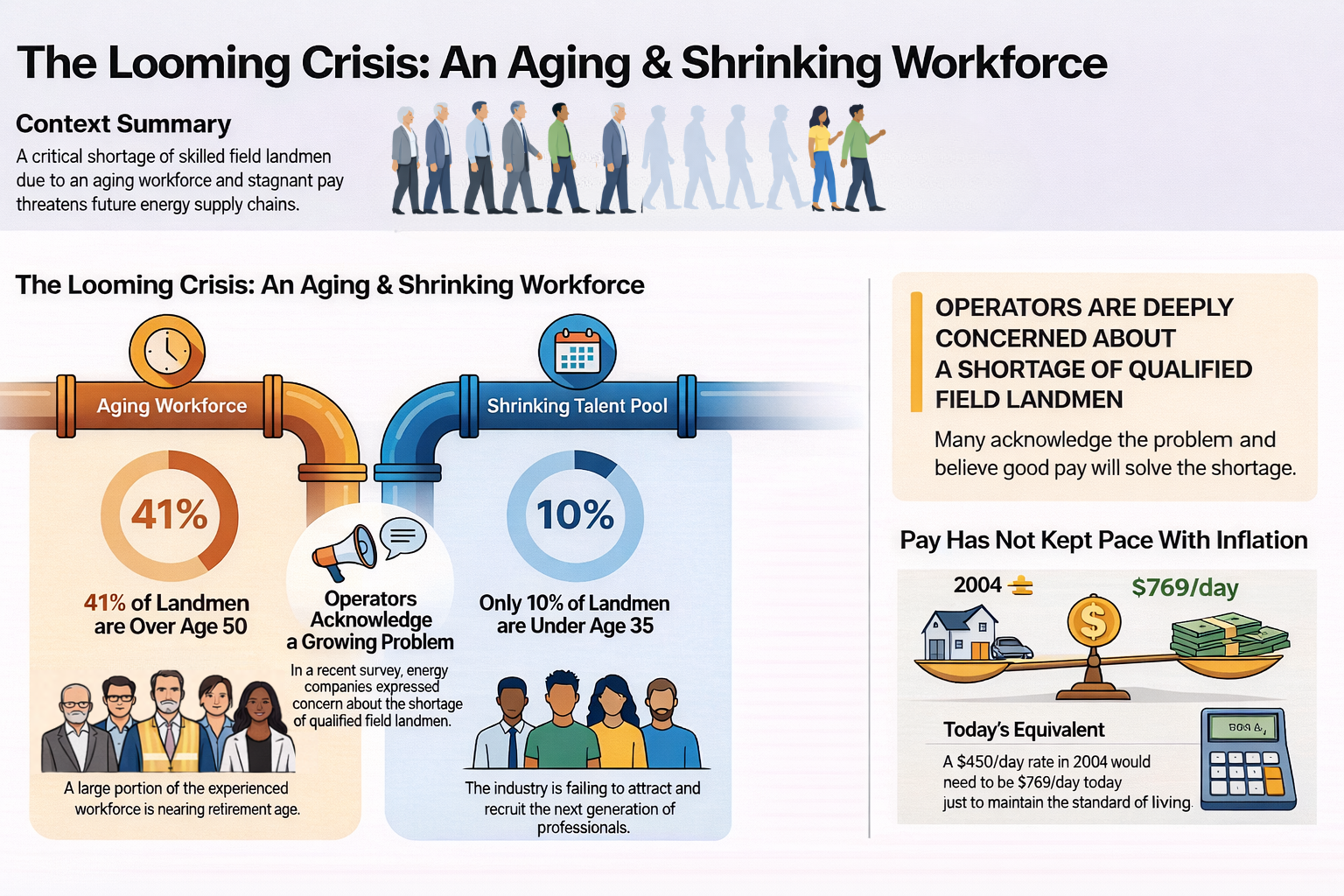
EDITOR'S NOTE: The following graphics help illustrate the looming crising due to an aging and shrinking workforce and the ROI of a landman.